If you are paying for a loved one's care, the NHS may be required by law to pay that bill in full.
NHS Continuing Healthcare is a statutory entitlement, not means-tested, not discretionary. Most families who qualify are never told. Chekai© exists because someone has to stand on the other side of the table.
The eligibility gap is not random. It is structural.
A statutory entitlement, not a benefit.
NHS Continuing Healthcare (CHC) is a package of fully funded care for adults whose primary need is a health need. It is set out in the NHS Act 2006 and governed by the National Framework for NHS Continuing Healthcare and NHS-Funded Nursing Care (July 2022).
Eligibility turns on whether a primary health need exists, judged by the Nature, Intensity, Complexity, and Unpredictability of the needs. These four characteristics are the language the assessment is written in. How clinical evidence is framed against each one determines the outcome more than almost any other factor.
Chekai© works with families at every stage of the process.
You are paying for care and your loved one has complex needs
Most families paying privately have never been formally assessed for CHC. If the clinical picture is complex, dementia, neurological decline, complex wound care, palliative needs, there may be a statutory entitlement that has been missed entirely.
You have received a Not Eligible letter
You have six months from the date of that letter to lodge a formal challenge. The strength of a challenge depends on how the clinical evidence is reframed against the National Framework characteristics, and on identifying procedural failures in the original assessment.
CHC funding has been withdrawn
Withdrawal can only be lawful if there has been a Material Change, a meaningful clinical improvement, not a reorganisation of services or a budget pressure. Withdrawals frequently fail this test on close examination of the evidence.
An MDT meeting is scheduled
The Multi-Disciplinary Team meeting is where eligibility is determined. Preparation matters. Most families attend without knowing what evidence carries weight, what questions to ask, or how to challenge a domain level recorded incorrectly.
Fast-Track funding has been withdrawn
Fast-Track CHC is for rapidly deteriorating conditions and end-of-life care. When it is withdrawn at a subsequent assessment, the criteria for ongoing standard CHC are entirely separate. Families are often unaware they need to be assessed all over again.
Retrospective claim: your loved one has passed away
Where care fees were paid privately and CHC eligibility was never properly considered, a retrospective claim can be made on behalf of the estate, often covering several years. The clinical evidence remains in the records.
If you have received a Not Eligible letter: you have six months from the date of that letter to lodge a formal appeal. Do not let the deadline expire while you decide. The earlier in that window the work begins, the stronger the challenge.
It is a clinical decision, not a legal one.
CHC eligibility is determined by clinicians, conducted through a clinical framework, recorded in a clinical document called the Decision Support Tool. Solicitors do not sit in MDT meetings. Solicitors do not complete DSTs. The decision is made before any legal challenge can begin, and once it is made, reversing it is far harder than getting it right the first time.
The same evidence, the same patient, produces different outcomes depending on how it is described in the DST. A behaviour that is "managed with prompting" reads differently from a behaviour that is "intensive, daily, requires skilled intervention to prevent harm." Both can be true. Only one captures what the National Framework is asking the assessor to evaluate. Most families never know this is the lever.
Six ways Chekai© works with families.
Evidence Structuring & DST Alignment
Reviewing the available care records and reframing the clinical picture against the four National Framework characteristics, Nature, Intensity, Complexity, Unpredictability, so the DST captures what is actually happening.
MDT Representation
Attending the Multi-Disciplinary Team meeting alongside you, or in your place where you wish. Knowing what to ask, what to challenge, and what to put on the record.
Annual Review Defence
Where CHC funding is in place and a review is approaching, building the evidence base that demonstrates the primary health need has not ceased.
Formal Challenge Support
Where a Not Eligible decision has been received, drafting the formal challenge letter, identifying procedural and clinical grounds, and engaging with the ICB and NHS England as required.
Retrospective Assessment
Where a loved one has passed away and care was paid for privately, working with the estate to recover funding through a retrospective CHC claim.
Full Funding After Fast-Track
When Fast-Track is withdrawn, ensuring the standard CHC assessment that follows is conducted properly and that any continuing primary health need is recognised.
Munya Shonhiwa, NHS CHC Specialist Practitioner.
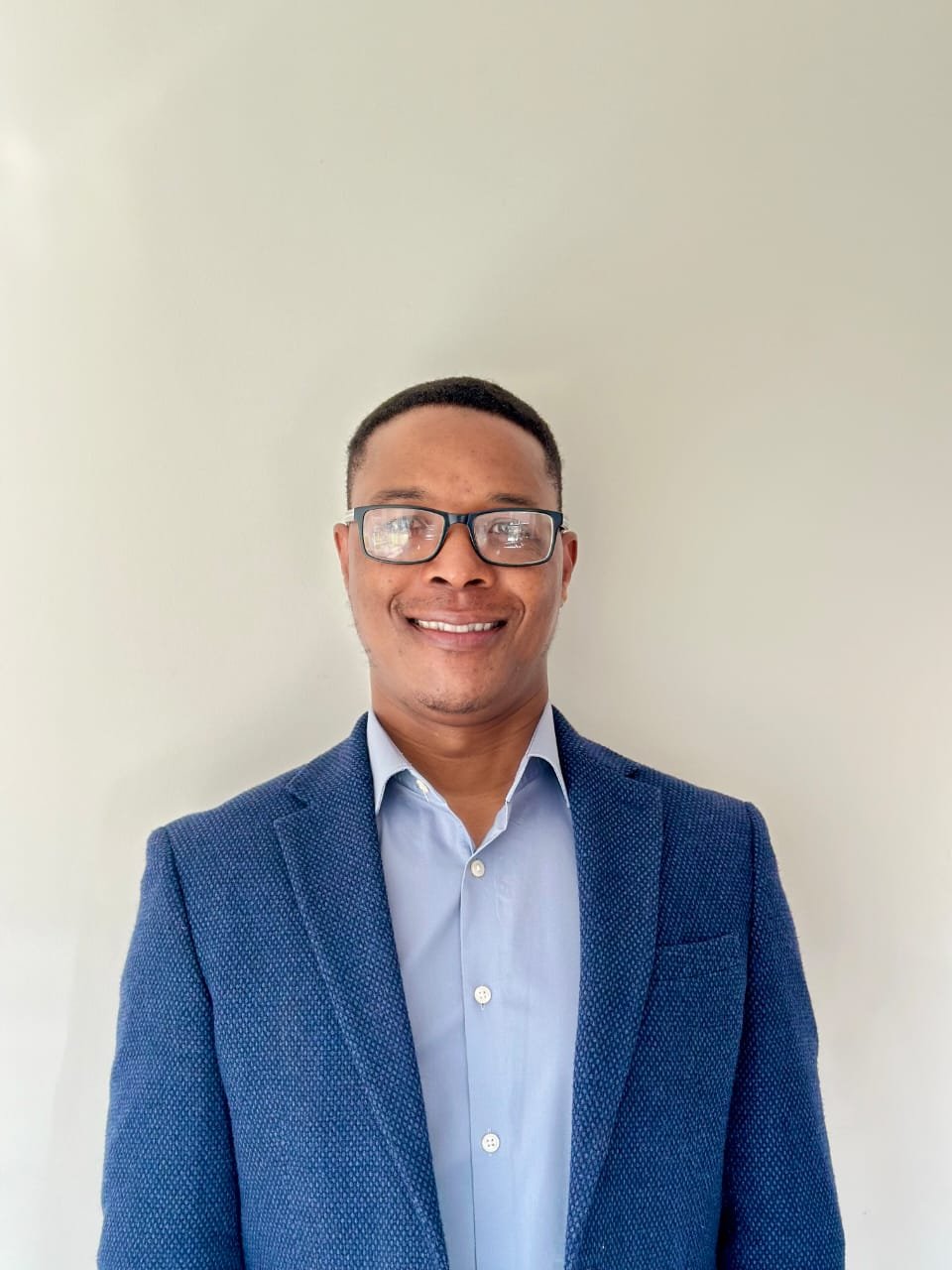
Inside the MDT for eight years.
Munya worked as a CHC Specialist Practitioner inside NHS Integrated Care Boards. He chaired Multi-Disciplinary Team meetings, completed Decision Support Tools, and made the eligibility recommendations that determined whether families received full funding. He saw the system from the inside, and he saw what changes outcomes.
"Families do not need someone who learned CHC from a textbook. They need someone who completed the DSTs, chaired the MDTs, and knows exactly where the system creates the gap."Read Munya's full story
Why a former NHS CHC practitioner is different.
| Solicitor | Large Agency | Free Charities | Chekai© | |
|---|---|---|---|---|
| Has personally completed a DST | ✗ | Rarely | Sometimes | ✓ |
| Has chaired an MDT | ✗ | Rarely | ✗ | ✓ |
| Works only for families (no NHS contracts) | ✓ | Mixed | ✓ | ✓ |
| No win-fees / no percentage on outcomes | ✗ | ✗ | ✓ | ✓ |
| Clinical insider experience inside CHC team | ✗ | ✗ | ✗ | ✓ |
Free advocacy from charities such as Beacon CHC is genuinely valuable, particularly for first-stage navigation and signposting. Where Chekai© differs is in the depth of clinical insider experience required for complex challenges, contested withdrawals, and high-stakes MDT representation.
Three steps. No obligation to proceed.
Initial conversation
A direct, no-obligation conversation with Munya. You describe the situation. He listens, asks the questions a CHC practitioner would ask, and tells you honestly whether there is a case worth pursuing.
Evidence and case review
If there is something to work with, Munya reviews the available care records, prior DSTs, decision letters, and any MDT documentation. You receive a written summary of the strengths, the weaknesses, and the proposed approach.
Representation and challenge
Where you decide to proceed, Chekai© represents you through MDT meetings, formal challenges, and engagement with the ICB until the case is resolved. Fixed fees agreed in advance.
Fixed fees. No percentages. No win-fees. Ever.
CHC funding belongs to your loved one. Some advocacy services charge a percentage of the funding they help secure, on an £80,000 annual package, that is money taken directly out of someone else's care. Chekai© does not work that way.
Fees are fixed and agreed in advance
Funding belongs to your loved one
CHC is a clinical process, that is where the work is done
This is the law, not a favour
If you want to do this yourself, do it with the inside knowledge.
The Chekai© Blueprint is the complete practitioner-written guide to NHS Continuing Healthcare. 22 chapters. Five parts. Four clinical case studies. Five direct-use tools. Including the five-step Nature Characteristic Framework, the single greatest lever for securing eligibility.
- The Primary Health Need test in full, with clinical worked examples
- The five-step Nature Characteristic Framework
- Decision Support Tool: how each domain is actually scored
- The five-script Challenge Statement Library
- MDT preparation checklists and Red Flag indicators
- The one characteristic almost entirely absent from public guidance
Filai™
The companion clinical-language platform for CHC professionals and advocates. Built by Munya from inside the MDT, for the people who do the work.
Visit Filai.co.uk